

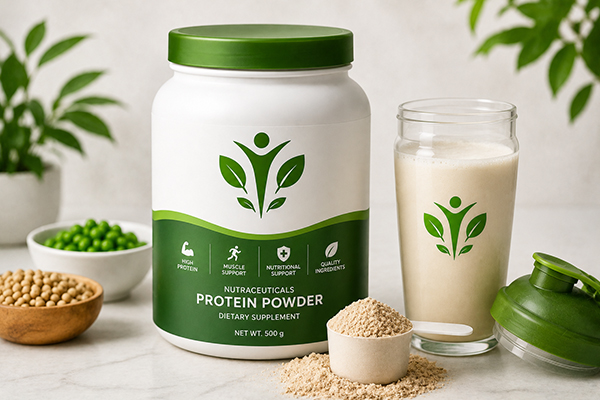
Protein powders are powdered formulations combining protein concentrates (whey, plant-based, or collagen) with complementary nutrients, creating convenient meal replacement and recovery solutions.
This is the fastest-growing supplement category, widely used in sports nutrition, fitness, meal replacement, and wellness.
Complete Nutraceutical Protein Powder Product List
| Sr. No. | Product Name | Pack Size |
|---|---|---|
| 1. | PROTEIN POWDER WITH DIFFRENT FLAVOURES CHOCOLATE, BANANA, AMERICAN ICE CREAM, DRY FRUIT |
200 GM |
| 2. | PROTEIN POWDER WITH DHA | 200 GM |
| 3. | PROTEIN POWDER ( SUGAR FREE ) | 200 GM |
What Are Nutraceutical Protein Powders?
Protein powders are finely ground blends of:
- Protein Source: Whey, casein, plant-based, collagen
- Carbohydrates: Quick-acting sugars or complex carbs
- Fats: Minimal, may include MCT oil
- Micronutrients: Vitamins and minerals
- Flavorings: Chocolate, vanilla, fruit flavors
- Thickeners: Ensure proper texture when mixed
Protein Sources Explained
Whey Protein:
- Most popular, complete amino acid profile
- Fastest absorption
- Supports muscle growth and recovery
- Best for post-workout recovery
Casein Protein:
- Slow-digesting, sustained energy
- Best for nighttime use
- Supports extended satiety
- Often in meal replacement formulas
Plant-Based Proteins:
- Pea, rice, hemp proteins
- Vegan and vegetarian-friendly
- Complete amino profile when combined
- Growing market segment
Collagen Protein:
- Skin, joint, and bone health focus
- Beauty and wellness angle
- Different amino acid profile
- Growing popularity
How Protein Powders Are Manufactured (40 Days)
Benefits & Applications
Types of Protein Powders
- Sports Nutrition Protein: High protein, moderate carbs, fast absorption, ideal post-workout
- Meal Replacement Powders: Complete macronutrient profile, higher carbs and fats, sustained energy
- Beauty & Wellness Protein: Collagen base for skin health, hyaluronic acid, biotin
- Vegan/Plant-Based Protein: Pea, rice, hemp, or blend, environmentally conscious
FAQs
Isolate is processed more (higher protein percentage, less lactose). Concentrate has slightly less protein. Both effective; isolate better for lactose-sensitive individuals.
Yes, protein powder benefits everyone equally. Gender-targeted marketing is primarily about flavor and marketing.
No, powder stays stable at room temperature. After mixing with liquid, consume within 1–2 hours or refrigerate.
Hot water can damage protein structures and reduce absorption. Use cold or room-temperature water.
Moisture absorption in powder form, or inadequate mixing. Store in airtight container with desiccant. Mix with shaker bottle or blender.
FDA-approved sweeteners (aspartame, sucralose, stevia) are considered safe at typical levels. Some prefer natural sweeteners.
Yes, but heat may alter protein structure. Protein-fortified baking works best with lower oven temperatures and shorter baking times.
Consumed immediately is best. In refrigerator: 1–2 hours maximum. Longer storage risks bacterial growth.