

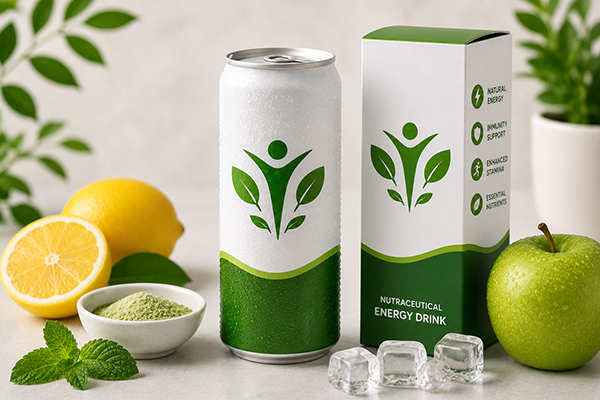
Energy drinks are nutrient-fortified beverages combining caffeine, B-vitamins, herbal stimulants, and electrolytes to provide immediate energy, mental focus, and physical performance enhancement. This category shows 15–20% annual growth globally.
Complete Nutraceutical Energy Drink Product List
| Sr. No. | Product Name | Pack Size |
|---|---|---|
| 1. | ENERGY DRINK POWDER ( BOX / POUCH ) DEXTROSE 17.5 GM, SUCROSE 14 GM, ZINC SULPHATE 32.5 MG, ASCORBIC ACID 40 MG |
35 GM 105 GM 210 GM |
What Are Energy Drinks?
Energy drinks combine the following key components:
- Caffeine Source: Natural (green tea, coffee) or synthetic
- B-Vitamins: Energy metabolism support (B1, B2, B3, B5, B6, B12)
- Herbal Stimulants: Guarana, ginseng, taurine
- Sweeteners: Sugar, high fructose corn syrup, or artificial
- Electrolytes: Sodium, potassium, magnesium
- Flavorings: Fruit, citrus, tropical, berry
- Additional Ingredients: Taurine, L-carnitine, amino acids
Energy Drink Categories
How Energy Drinks Are Manufactured (40 Days)
Benefits & Applications
- Physical Performance: Enhanced endurance and strength
- Mental Clarity: Improved focus for work or studying
- Morning Energy: Replace coffee with a convenient beverage
- Afternoon Slump: Combat mid-day fatigue
- Gaming/Esports: Sustained focus for extended sessions
Quality Standards
- Caffeine Content: Exact level verified
- B-Vitamin Content: Potency verification
- Stability: Ingredients remain suspended
- Microbial Safety: Sterility and contamination screening
- pH Balance: Optimal for taste and stability
- Shelf Life: Typically 2-3 years
Types of Energy Drinks
- Traditional Energy Drinks: High caffeine, multiple stimulant herbs, sugar or artificial sweeteners, intense flavors
- Sports Energy Drinks: Moderate caffeine, high electrolytes, carbohydrates for fuel, hydration focus
- Natural/Organic Energy: Green tea or coffee as caffeine source, herbal ingredients, honey or natural sweeteners
- Nootropic Energy Drinks: Moderate caffeine, brain-supporting ingredients, mental focus emphasis, premium positioning
- Pre-Workout Energy: Science-backed ingredients, beta-alanine, creatine, high caffeine, for serious fitness enthusiasts
FAQs
FDA recommends maximum 400 mg per day for adults. Individual tolerance varies; sensitive individuals should consume less.
Caffeine is caffeine—body can’t distinguish natural from synthetic. Natural sources provide additional compounds. Both work equally for energy.
Depends on caffeine sensitivity and consumption time. Consuming 4–6 hours before bed may disrupt sleep.
Individual sensitivity to stimulants varies. Start with lower caffeine drinks to test tolerance.
Some do without issues; others shouldn’t. Depends on individual tolerance, health conditions, and medications. Consult healthcare provider.
Different stimulants. Caffeine affects nervous system directly. Taurine is an amino acid supporting energy metabolism. Both work synergistically.
Yes, caffeine and proper electrolytes improve endurance. Peak effects occur 30–60 minutes after consumption.
Depends on goals. Sugar-free reduces calories and blood sugar impact. Regular provides quick fuel. Both contain caffeine equally.